Patient guide
How to do a 10-minute NASA Lean Test
The NASA Lean Test is a simple at-home measure of how your body handles being upright. You take blood pressure and pulse readings lying down, then every minute for ten minutes while leaning against a wall, recording symptoms as they happen.
Last updated September 1, 2026
A few things to have before you begin
- BP cuffAutomatic, upper arm
- Pulse oximeterContinuous, to wear on index finger
- A timerRepeating one-minute alert
- A sturdy wallAt least shoulder height
- Somewhere flatQuiet, dim room
- A helperIf you can — to record and observe
Change nothing beforehand
Take your usual medications, fluids, and electrolyte supplements as you normally would. We want to capture how you are feeling in your current state to determine what may need to be adjusted.
Your cuff may record for you
Many cuffs store historical readings, and many sync to a free app associated with the brand of cuff. Many different product options are available at most retailers. Symptoms are the exception: always write those down yourself.
The three stages
- 1
Rest lying down
15–20 min- Shoes and socks off, lie flat on your back in a quiet, dim room.
- Put the cuff on upper arm — contact with bare skin, level with your heart.
- Stay calm but awake; sleep changes heart rate.
- 2
Take your resting baseline
2–4 min- Without sitting up, take a blood pressure and pulse ox reading.
- Wait one minute, then take another blood pressure and pulse ox reading.
- 3
Stand and lean
10 min- Once leaning against the wall, take the minute 0 reading immediately.
- Take both readings at every minute mark through minute 10.
- In between, stay still and quiet — no talking, shifting your feet, or crossing your legs. Movement pumps blood back to the heart and hides what you are measuring.
- Note symptoms beside the minute they start. At minute 10, sit or lie down.
What it looks like
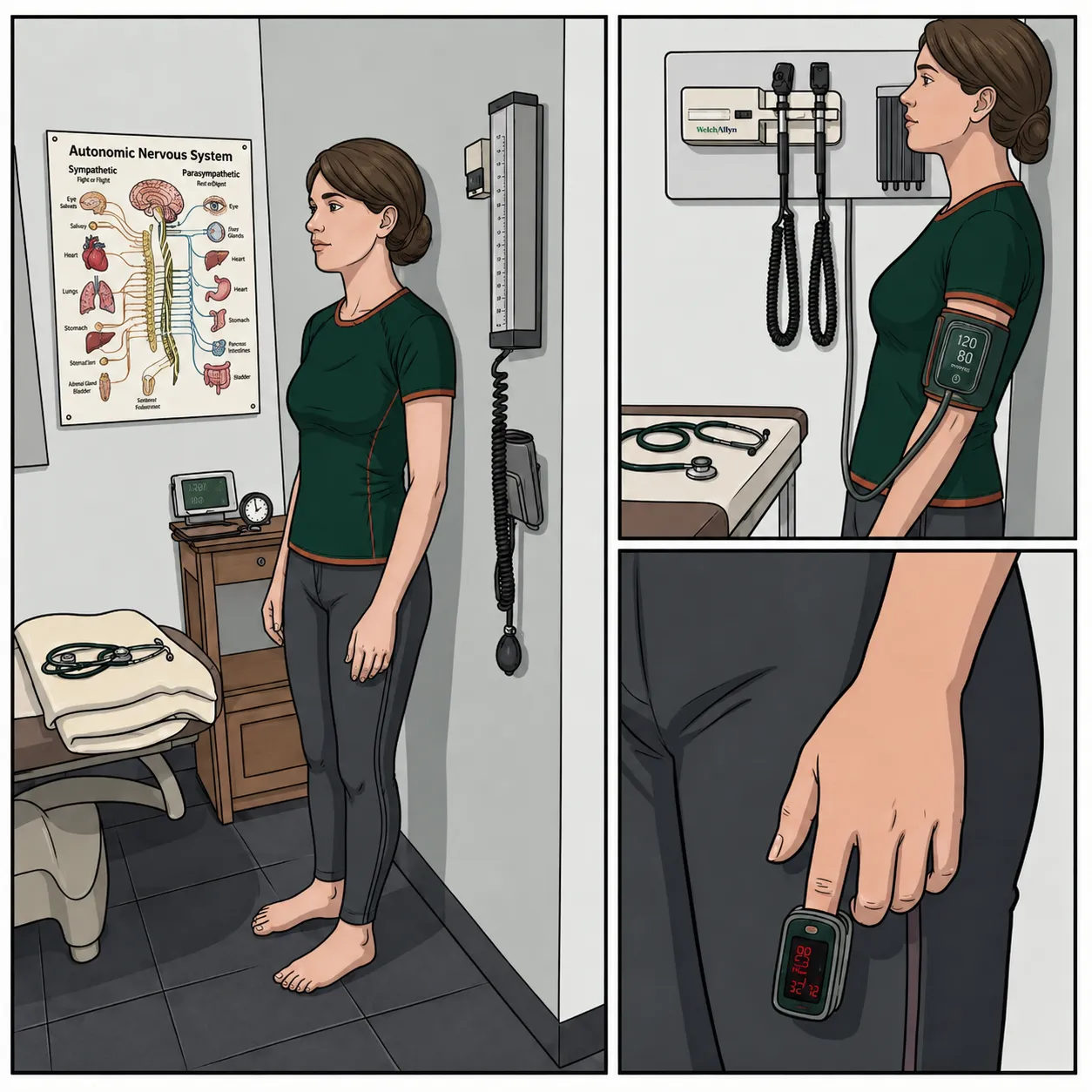
How to position yourself against the wall
- Only your shoulder blades touchStand tall, the back of your shoulders resting on the wall.
- Heels about 6 inches outHips and bottom clear of the wall; soft knees, arms loose.
- Don't arch your lower backKeep it gently flat — no pushing your stomach forward.
Stop if you feel faint
Vision graying or narrowing, severe lightheadedness, or ringing in the ears means sit or lie down straight away. A test stopped early is still useful — record the minute and why. If you have fainted during a lean or tilt test before, do not do this alone.
Symptoms worth noting
Lightheadedness · pounding or racing heart · breathlessness · vision changes · nausea · tremor · pale or mottled skin · cold hands and feet.
Record as you go
Print this page or the PDF and fill it in as you test, then bring it to your clinician.
| Time | Reading | Systolic | Diastolic | Heart rate | SpO₂ | Symptoms / notes |
|---|---|---|---|---|---|---|
| Baseline 1 | ||||||
| Baseline 2 | ||||||
| Lean 0 | ||||||
| Lean 1 | ||||||
| Lean 2 | ||||||
| Lean 3 | ||||||
| Lean 4 | ||||||
| Lean 5 | ||||||
| Lean 6 | ||||||
| Lean 7 | ||||||
| Lean 8 | ||||||
| Lean 9 | ||||||
| Lean 10 |
Questions about the NASA Lean Test
What is a NASA Lean Test?
The NASA Lean Test is a simple at-home measure of how your body handles being upright. You take blood pressure and pulse readings while lying down, then every minute for ten minutes while leaning against a wall, and record any symptoms as they happen.
What equipment do I need for a NASA Lean Test?
An automatic upper-arm blood pressure cuff, a pulse oximeter you can wear continuously on your index finger, a timer that alerts every minute, a sturdy wall at least shoulder height, a quiet flat space, and — if possible — a helper to record readings and observe you.
How long does the test take?
About 30 minutes in total: 15–20 minutes lying down to rest, 2–4 minutes taking your resting baseline readings, and 10 minutes leaning against the wall.
Should I change my medications or fluids before the test?
No. Take your usual medications, fluids, and electrolyte supplements as you normally would. The goal is to capture how you are feeling in your current state, so your clinician can see what may need to be adjusted.
Why do I need to stay still while leaning?
Movement pumps blood back to the heart and hides exactly what the test is measuring. Stay still and quiet between readings — no talking, shifting your feet, or crossing your legs.
What if I feel faint during the test?
Stop. Vision graying or narrowing, severe lightheadedness, or ringing in the ears means sit or lie down straight away. A test stopped early is still useful — record the minute and why. If you have fainted during a lean or tilt test before, do not do this alone.
This handout is for educational and informational purposes only and does not constitute medical advice. Please consult your healthcare provider with any questions.
Care for the complexity behind your symptoms.
Vindara Health is a virtual specialist clinic for Long COVID, ME/CFS, POTS and dysautonomia, MCAS, and related complex chronic illness — open in Arizona, Colorado, Utah, and Washington.
Join waitlist